
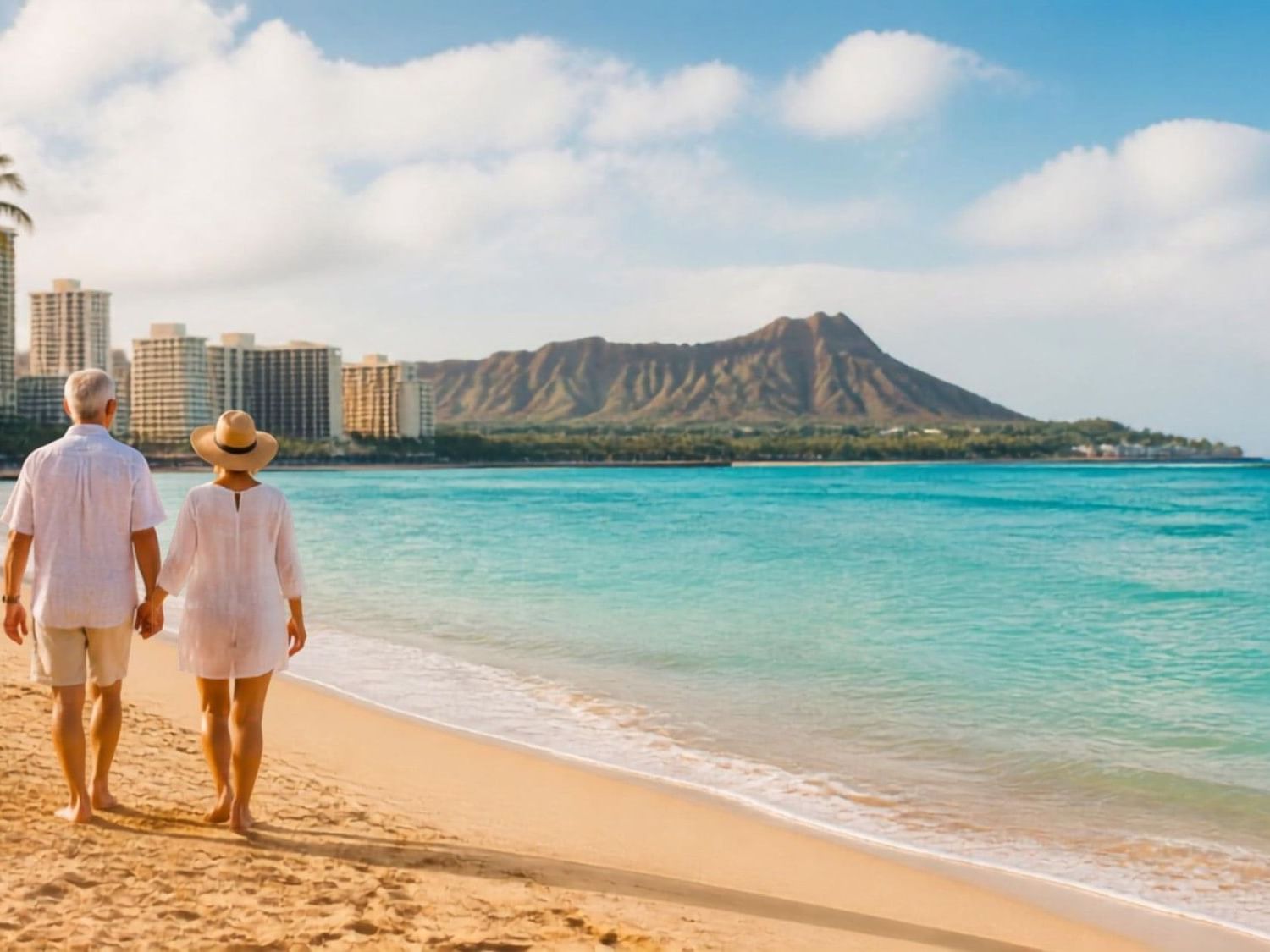
What are the best things to do on Oʻahu for seniors? The island offers much more than strenuous hikes and adventure tours. Older travelers can enjoy scenic lookouts, historic attractions, botanical gardens, cultural sites, boat rides, guided sightseeing tours, and relaxing beach experiences at a comfortable pace.
For many senior visitors, the best Oʻahu itinerary balances sightseeing with rest. Choosing attractions with seating, shade, accessible paths, indoor spaces, and convenient transportation can make the trip more enjoyable for everyone.
Waikiki Resort Hotel is a practical home base for exploring Honolulu and the rest of Oʻahu. The hotel is near Waikiki Beach, restaurants, shopping, and attractions, and its property includes an elevator, front entrance ramp, accessible parking, and an accessible on-site restaurant.
Highlights at a Glance
- Best historic attraction: Pearl Harbor National Memorial.
- Best cultural attraction: ʻIolani Palace or the Bishop Museum.
- Best scenic experience: A guided island tour or a drive to Nuʻuanu Pali Lookout.
- Best garden visit: Foster Botanical Garden, Ho‘omaluhia Botanical Garden, or Waimea Valley.
- Best low-impact Waikiki activity: A beach walk, cultural class, or sunset catamaran cruise.
- Best indoor activity: Honolulu Museum of Art or Bishop Museum.
- Best option for limited mobility: A guided sightseeing tour with hotel pickup and minimal walking.
- Best place to stay: A centrally located Waikiki hotel close to dining, transportation, and visitor attractions.
What to Do on Oʻahu: A Relaxed Guide for Senior Travelers
What are the best senior-friendly activities on Oʻahu?
1. Visit Pearl Harbor National Memorial
Pearl Harbor is one of Oʻahu’s most significant historical attractions. Visitors can learn about the events of December 7, 1941, explore museum exhibits, and visit memorial sites connected to the history of World War II.
The memorial campus includes visitor facilities, exhibits, and different attractions that may involve varying amounts of walking. Seniors should review the current attraction details before visiting and decide which sites best match their mobility and energy levels.
Why it works for seniors:
-
Offers educational indoor and outdoor exhibits.
-
Can be planned as a half-day visit.
-
Provides a meaningful cultural and historical experience.
-
Works well with a guided tour or private transportation.
Check current ticketing, ferry, security, operating hours, and accessibility information before going.
2. Take a guided circle-island tour
A guided island tour is one of the easiest ways to see Oʻahu without planning every route independently. Many tours combine scenic viewpoints, beaches, cultural sites, and short stops while allowing travelers to spend much of the day seated in an air-conditioned vehicle.
Before booking, ask:
-
How much walking is required?
-
Are there stairs at any stops?
-
Is hotel pickup available?
-
Is the vehicle air-conditioned?
-
Are there restrooms during the tour?
-
Can the itinerary accommodate a wheelchair, walker, or mobility scooter?
-
How long does the vehicle remain at each stop?
A private tour may offer more flexibility, while a small-group tour can provide a balance of convenience and cost.
3. Enjoy the views at Nuʻuanu Pali Lookout
Nuʻuanu Pali Lookout offers dramatic views of the Koʻolau Mountains and Windward Oʻahu. It is a good option for travelers who want a scenic experience without committing to a long hike.
The lookout can be windy, and conditions may change quickly. Bring a light layer, wear stable shoes, and use caution near edges and uneven surfaces.
Best for: Scenic photography, short sightseeing stops, and travelers who prefer views accessible by vehicle.
4. Drive to a Diamond Head viewpoint
Diamond Head is famous for its summit hike, but visitors do not need to climb the crater to appreciate the landmark. Seniors can enjoy views of the area from nearby roads, Kapiʻolani Park, Waikiki Beach, or an organized sightseeing stop.
Travelers who want to hike should carefully assess the distance, incline, heat, and availability of rest areas. The summit trail is not the best choice for every visitor, particularly during hot or crowded periods.
5. Explore Foster Botanical Garden
Foster Botanical Garden offers a peaceful setting in Honolulu with tropical plants, mature trees, and shaded areas. It can be a relaxing alternative to a busy sightseeing schedule.
Garden paths may vary in surface and incline, so visitors using walkers or wheelchairs should check current accessibility information before visiting. Allow plenty of time and avoid treating the garden as a race from one section to another.
6. Visit Ho‘omaluhia Botanical Garden
Ho‘omaluhia Botanical Garden is known for its lush landscape and views of the Koʻolau Mountains. Much of the experience can be enjoyed by driving through or stopping at selected areas rather than walking the entire grounds.
This makes it particularly appealing for seniors who want to see Oʻahu’s natural scenery at a slower pace. Bring water, sun protection, and insect repellent, and confirm current access rules before visiting.
7. See Byodo-In Temple
Byodo-In Temple in the Valley of the Temples is a tranquil cultural site inspired by the original Byodo-In Temple in Uji, Japan. Visitors can admire the architecture, pond, gardens, and surrounding mountain scenery.
Paths are generally more manageable than a strenuous hiking trail, but the site includes outdoor surfaces and may not provide air conditioning. Seniors should wear comfortable shoes and ask about current accessibility conditions if using a wheelchair or mobility aid.
8. Spend a quiet morning at Kapiʻolani Park
Kapiʻolani Park is one of the easiest places to enjoy a relaxed outdoor experience near Waikiki. Visitors can sit beneath the trees, walk short distances, take photographs of Diamond Head, or visit nearby attractions.
A flexible visit might include:
-
Breakfast or coffee nearby.
-
A short walk through the park.
-
A visit to the Honolulu Zoo or Waikiki Aquarium.
-
A rest stop under the trees.
-
A return to the hotel before the afternoon heat.
This is a useful option for seniors who prefer a low-cost activity close to their accommodations.
Which Oʻahu attractions are best for culture and history?
9. Tour ʻIolani Palace
ʻIolani Palace was the official residence of Hawaiʻi’s monarchy and is now a museum in downtown Honolulu. It provides insight into Hawaiian history, the monarchy, and the cultural changes that shaped the islands.gohawaii
A palace visit can be combined with a short downtown sightseeing route featuring nearby historic landmarks. Check tour schedules and accessibility details before arriving, as some areas may involve stairs or timed entry.
10. Visit the Bishop Museum
The Bishop Museum is a strong choice for travelers interested in Hawaiian culture, natural history, and the Pacific region. Its indoor galleries provide a comfortable alternative when the weather is hot or rainy.
Plan for a slower visit rather than attempting to see every exhibit. Identify seating areas, restrooms, dining options, and the galleries that are most relevant to your interests.
11. Explore the Honolulu Museum of Art
The Honolulu Museum of Art offers an air-conditioned cultural experience with galleries, exhibitions, and opportunities to sit and rest between rooms. It can be an excellent afternoon activity after a morning outdoors.
Museum visitors should review current hours, admission information, and exhibit schedules. If you are visiting with a wheelchair or walker, contact the museum in advance to ask about routes, entrances, and available assistance.
12. Attend a Hawaiian cultural presentation
Seniors can experience Hawaiian culture through hula, music, storytelling, lei making, or ukulele programs. These activities are often less physically demanding than long tours while still offering a meaningful connection to the destination.
Waikiki Resort Hotel lists activities such as lei making, hula, ukulele, yoga, mat Pilates, and sound healing among its current amenities and guest experiences. Availability may vary by date, so check the schedule before making plans.
What are the best low-impact outdoor activities on Oʻahu?
13. Take a sunset catamaran cruise
A sunset cruise lets travelers enjoy views of Waikiki and Diamond Head from the water while spending most of the experience seated. Some cruises include food, drinks, live entertainment, or narrated sightseeing.
Before booking, confirm:
-
Boarding requirements.
-
Whether the vessel has stairs.
-
Seating arrangements.
-
Restroom availability.
-
Boarding assistance.
-
Weather cancellation procedures.
-
Whether food and beverages are included.
A cruise is especially suitable for seniors who want a memorable evening activity without a long walking route.
14. Visit Waimea Valley
Waimea Valley combines botanical gardens, cultural interpretation, and a scenic route toward a waterfall. The paved path may be manageable for many visitors, but the distance and heat can still be tiring.
Some visitors may prefer to:
-
Walk only part of the route.
-
Use an available shuttle or golf-cart service, if operating.
-
Take frequent breaks.
-
Visit early in the day.
-
Ask staff about current path conditions.
Verify transportation services, waterfall access, opening hours, and weather conditions before visiting.
15. Enjoy a scenic drive along the North Shore
A North Shore drive offers beaches, small towns, food stops, and rural scenery. It is a good choice for seniors who prefer sightseeing from a vehicle with occasional short stops.
A relaxed itinerary may include:
-
Leave Waikiki after breakfast.
-
Stop at a scenic viewpoint.
-
Visit a North Shore town.
-
Have lunch at a local restaurant.
-
Stop for coffee or dessert.
-
Return before driving conditions become difficult.
Avoid packing too many stops into one day. A private driver or small-group tour can reduce navigation and parking concerns.
16. Explore Ho‘omaluhia Botanical Garden by car
Ho‘omaluhia is particularly appealing for visitors who want lush mountain scenery without a demanding hike. Much of the landscape can be appreciated from the road, with optional stops for photographs and short walks.
The garden may have changing conditions, access rules, or closures, so check official information before traveling.
17. Relax at Waikiki Beach
A beach visit does not need to involve swimming or long walks. Seniors can enjoy Waikiki by sitting in a shaded area, watching the outrigger canoes, taking photographs, or walking a short stretch of the shoreline.
For visitors with limited mobility, ask the beach services or hotel team about current beach-access equipment and routes. Conditions can vary depending on the area, weather, and availability.
What can seniors do in Waikiki?
18. Walk along Kalākaua Avenue
Kalākaua Avenue provides access to restaurants, shops, galleries, hotels, and public spaces. Seniors can explore a short section, stop for refreshments, and return to the hotel without committing to a full-day excursion.
Plan the walk during the morning or early evening when temperatures are more comfortable. Bring water and choose supportive footwear.
19. Visit the Honolulu Zoo or Waikiki Aquarium
Both attractions can be included in a gentle Waikiki itinerary. Visitors should review the size of the grounds, walking distances, available seating, shaded areas, and accessibility features before entering.
A practical plan is to choose one attraction rather than trying to visit both on the same day.
20. Enjoy a hotel wellness activity
A hotel activity can be a convenient way to experience Hawaiʻi without transportation or extensive walking. Depending on the schedule, seniors may be able to join a gentle cultural, fitness, or wellness activity.
At Waikiki Resort Hotel, available experiences may include lei making, hula, ukulele, sound healing, yoga, and mat Pilates. Confirm class intensity and accessibility in advance, especially if balance or mobility is a concern.
How can seniors plan a comfortable Oʻahu itinerary?
Should seniors choose a Waikiki hotel?
Waikiki can be a convenient base because it offers beaches, restaurants, shopping, tours, and transportation within a relatively compact area. Staying near these services can reduce the need for long daily drives.
Waikiki Resort Hotel is near Waikiki Beach and several visitor attractions. Its listed accessibility features include an entrance ramp, elevator, accessible parking, raised or braille signage, and an accessible lounge and restaurant.waikikiresorthotel
Travelers should confirm room layouts, bathroom features, grab bars, roll-in showers, and other specific requirements directly with the hotel before booking.
How many activities should seniors plan each day?
For many travelers, one major attraction and one lighter activity are enough for a comfortable day. For example:
-
Morning: Pearl Harbor.
-
Afternoon: Hotel rest and lunch.
-
Evening: Waikiki dinner or a sunset cruise.
Avoid planning several attractions on opposite sides of the island in one day. Oʻahu traffic, heat, parking, and travel time can make an ambitious itinerary exhausting.
What should seniors pack for Oʻahu?
Useful items include:
-
Supportive walking shoes.
-
Sun hat and sunglasses.
-
Light layers.
-
Refillable water bottle.
-
Sunscreen.
-
Medication and a small health kit.
-
Portable mobility aids, if needed.
-
A light rain jacket.
-
Printed or digital emergency contacts.
-
A small bag for snacks and personal items.
How can travelers prepare for mobility needs?
Contact hotels, tour providers, attractions, and transportation companies before arrival. Ask specific questions rather than relying only on the word “accessible.”
Confirm:
-
Number of stairs.
-
Surface types.
-
Distance from parking to entrance.
-
Availability of elevators.
-
Restroom locations.
-
Seating and shade.
-
Wheelchair or scooter storage.
-
Vehicle lift or ramp requirements.
-
Assistance during boarding.
Suggested Senior-Friendly Oʻahu Itinerary
Day one: Relaxed Waikiki
-
Have breakfast near the hotel.
-
Walk a short section of Waikiki Beach.
-
Rest at the hotel or by the pool.
-
Visit Kapiʻolani Park or a nearby attraction.
-
Enjoy an early dinner.
-
Watch the sunset from Waikiki.
Day two: Honolulu history and culture
-
Visit ʻIolani Palace or Bishop Museum.
-
Have lunch in downtown Honolulu.
-
Return to Waikiki for an afternoon break.
-
Join a lei-making, hula, or ukulele activity.
-
Enjoy a quiet evening at the hotel.
Day three: Scenic Oʻahu
-
Book a guided circle-island tour or private sightseeing drive.
-
Stop at a scenic lookout.
-
Visit a botanical garden or cultural site.
-
Choose a restaurant with convenient parking or hotel pickup.
-
Return to Waikiki before the evening rush.
Day four: Pearl Harbor
-
Visit Pearl Harbor in the morning.
-
Choose the attractions that match your walking ability.
-
Allow time for lunch and rest.
-
Spend the evening at the beach or enjoy a sunset cruise.
FAQ: Best Things to Do on Oʻahu for Seniors
What is the easiest way for seniors to see Oʻahu?
A guided sightseeing tour or private vehicle is often the easiest option because it reduces navigation, parking, and long-distance walking. Ask the provider how much walking is included at each stop.
What are the best activities on Oʻahu for seniors with limited mobility?
Good possibilities include scenic drives, Pearl Harbor visitor areas, museums, botanical gardens, sunset cruises, cultural classes, Waikiki sightseeing, and attractions with accessible paths or transportation. Accessibility varies, so confirm details directly before booking.
Is Oʻahu suitable for older travelers?
Yes. Oʻahu offers cultural attractions, museums, scenic drives, beaches, gardens, guided tours, and accessible hospitality options. The key is to plan realistic travel times and schedule regular breaks.
What are the best free things for seniors to do on Oʻahu?
Seniors can enjoy Waikiki Beach, Kapiʻolani Park, scenic viewpoints, selected public gardens, neighborhood walks, and sunset viewing. Some attractions may charge parking, admission, or service fees.
What can seniors do on Oʻahu when it rains?
Rainy-day options include Bishop Museum, Honolulu Museum of Art, ʻIolani Palace, shopping centers, cultural classes, hotel dining, and wellness activities. Check operating hours before traveling.
Is Diamond Head suitable for seniors?
The Diamond Head summit hike may be suitable for some active seniors but is not appropriate for everyone. It includes inclines, stairs, heat exposure, and uneven areas. Seniors who prefer a lower-impact experience can enjoy views of Diamond Head from Kapiʻolani Park, Waikiki, or a scenic drive.
Where is the best area to stay for seniors on Oʻahu?
Waikiki is a convenient choice for travelers who want access to dining, shopping, beaches, tours, and transportation without driving every day. A hotel near the beach and major visitor services can make daily activities easier.
Plan a More Comfortable Oʻahu Visit
The best things to do on Oʻahu for seniors are not necessarily the most physically demanding. Scenic drives, cultural attractions, gardens, museums, boat tours, and relaxed Waikiki activities allow older travelers to experience the island without rushing.
A comfortable stay begins with choosing a convenient home base. Waikiki Resort Hotel places guests near Waikiki Beach, dining, shopping, and Honolulu attractions, while its current property information lists accessibility features designed to support travelers with mobility needs.waikikiresorthotel
Planning an Oʻahu vacation? Book your stay at Waikiki Resort Hotel and create an itinerary that leaves plenty of room for sightseeing, rest, and enjoying Hawaiʻi at your own pace.